Resources – Case Studies

Building A Production-Grade Multilingual In-Cabin Speech Dataset for Automotive Voice Platform
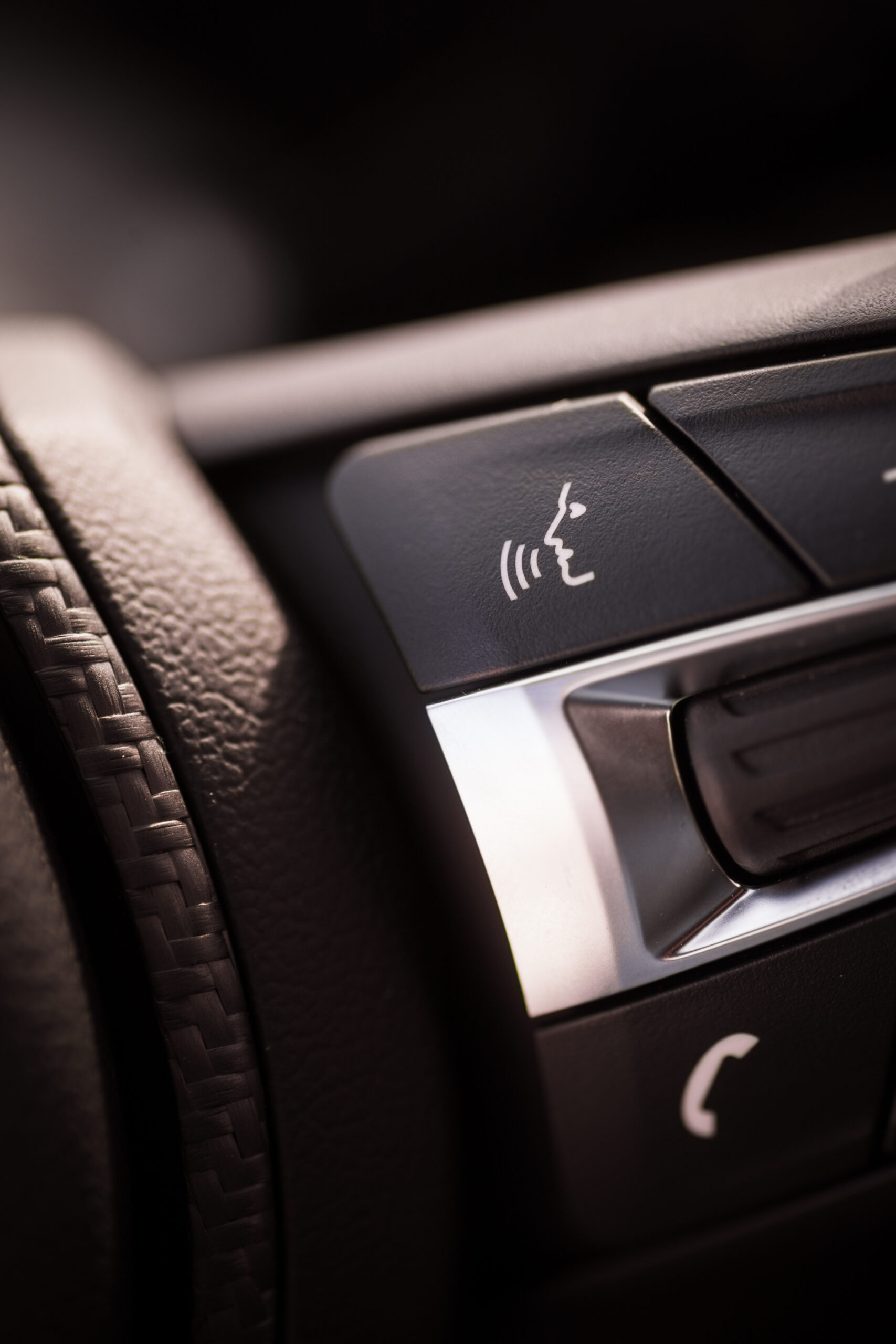
Buttons in a car

0

Languages & Regional dialects

0 +

Prompts

0

Native Speakers

0

Controlled in-cabin acoustic conditions.

The Challenge

The client was training a multilingual in-cabin voice platform and needed a production-grade dataset that didn’t exist. No off-the-shelf corpus matched the scale (22 languages and dialects), in-cabin acoustic variation, and linguistic coverage required for training and evaluation.

Building the dataset required four things simultaneously:

  • A specification precise enough that captured audio would generalize across accents, cabin configurations, and real driving noise.
  • The infrastructure to produce that audio under controlled capture conditions, with in-session quality validation before a sample ever left the vehicle.
  • Multilingual speakers to execute the spec across 22 languages, sourced, scheduled, and retained at volume.
  • And a participant compliance layer that the client’s insurance, legal, and security teams would actually sign off on. 

Every driver running a session had to clear a fleet-grade vetting bar: valid US driver’s license (no temporary permits), motor vehicle record on file, no DUI or license suspension within the past five years, no hit-and-run convictions, no more than two moving violations or chargeable accidents within the past four. Layered on top: a 100%-pass policy exam before the first session, signed telemetry-data-collection consent, and strict driver-only session protocols (no passengers, no key handoffs, no exceptions) to keep recordings clean of unauthorized voices and the program insurable under the client’s coverage.

A gap in any of the four, weak prompt design, loose capture protocol, dialect shortages, a single unvetted driver, would propagate to the platform at deployment, or stall the program before a single sample was captured.

This required not just execution, but a production operations layer capable of translating specification into consistent, scalable data output, while running a parallel compliance regime that kept every session auditable, every driver qualified, and every vehicle accountable.

The Approach

PPH ran the program end-to-end against the client’s specifications, translating requirements into a controlled, repeatable production system. Three key components carried the technical weight: 

1. Dataset Design

PPH executed the defined specifications for dataset design and capture in close collaboration with the client. Each language set was produced to meet required phonetic coverage, regional variation, and in-domain command distribution (navigation, media control, system commands, structured inputs). Recording protocols followed defined standards for microphone placement, device configuration, and audio sample rates across 14 controlled in-cabin conditions, including both driving and stationary scenarios, with variations in fan speed and window position.

2. Real-World In-Cabin Capture Conditions

The decision to capture in real vehicles, on real roads, was deliberate. Simulated cabins and noise-injected clean speech are faster and cheaper, but they break in the places an in-cabin voice product cannot afford to break. Cabin acoustics are not generic enclosed spaces: glass curvature, panel materials, seat absorption, and the geometry between the driver’s mouth and the production microphone produce a resonance signature that synthetic reverb does not reproduce. Road and wind noise are not stationary; they carry vehicle-specific low-frequency rumble, tire-on-surface harmonics, and pressure artifacts correlated with speed and aerodynamics that overlay noise tracks cannot fake. HVAC adds tonal fan content that couples into the cabin differently than ambient noise played through a speaker.

3. Behaviorally Authentic Speech Collection

The larger issue is the speaker, not the room. Drivers in noisy environments unconsciously shift into Lombard speech: louder, slower, with altered pitch contour and compressed vowel space. A model trained on clean speech with noise added in post never sees Lombard articulation, so it underperforms on exactly the utterances it will most often encounter in deployment. Real driving also produces natural disfluency, head-position drift relative to the microphone, and the divided attention of someone actually operating a vehicle, all of which shape prosody and timing in ways a studio booth cannot.

Capturing in-vehicle closed the gap between training distribution and deployment distribution. The audio the model learned from was the same kind of audio the model would be asked to recognize. This ensured the dataset met the client’s requirements for consistency, coverage, and downstream model performance.

In-Cabin Collection

This layer functioned as the capture interface within the broader production system. The system governed prompt delivery per participant under the specified conditions, with privacy and compliance controls applied at capture. Audio was recorded in standardized formats (WAV, 16-bit PCM) aligned to downstream ASR and voice-model pipelines.

Each session ran through a fixed six-condition acoustic matrix designed to surface the noise environments the deployed model would actually encounter: stationary at 0 mph with windows up and fan at medium; 35 mph (55 kph) with windows up and medium fan; 35 mph with windows up and high fan; 35 mph with both front windows lowered halfway and medium fan; 65 mph (105 kph) with windows up and medium fan; and 65 mph with windows up and high fan. Each condition produced 200 to 300 prompted queries, captured only on smooth road segments and in calm weather to hold ambient noise floors consistent across speakers and sessions.

Capture parameters were normalized at the vehicle level before any audio was recorded. Fan speed was locked manually (level 3 for medium, level 5 or higher for high) to defeat auto-climate adjustment, with front and rear blowers matched where the cabin allowed it. All in-vehicle audio sources (navigation, music, radio) were muted. The voice-assistant client was version-pinned, both system locale and assistant locale were set to the target language, and the always-on hotword was disabled so wake-word false-fires could not interrupt or contaminate a take. Sessions were initiated by push-to-talk only, using a “Start test drive” command translated into each of the 22 target languages, after which participants gave on-record consent and worked through the prompt list. If a session broke (connectivity loss, app crash, environmental change), participants resumed inside the same condition rather than restarting, preserving per-condition sample integrity.

The PPH native-speaker sourcing and qualification system fed in-cabin collection. 715 native-level speakers across 22 languages and regional dialects were utilized.

QA + HITL Review

QA and HITL reviews served as the real-time quality enforcement layer within the production pipeline. Live, in-session validation of audio capture and linguistic accuracy, with immediate correction during recording and daily calibration across QA reviewers. Validation thresholds were enforced on transcription consistency, recording integrity, and prompt fidelity before acceptance. A closed-loop remediation system resolved issues via re-capture inside the session rather than after the fact, saving time and improving quality.

Operational Data Pipeline

This layer connected structured capture, validation, QA, and delivery as a unified production pipeline with standardized metadata and annotation layers across every workflow stage. Session-level metadata, including language, dialect, acoustic condition, device configuration, and speaker demographics, maintained traceability and consistency across downstream training workflows. Structured delivery batches, rolling releases, and standardized formatting ensured reliable ingestion into the client’s ASR and voice-model pipelines with minimal operational overhead.

Weekly Calibration Calls and Continuous Dashboard Visibility

A custom dashboard provided client stakeholders with real-time visibility into progress, coverage, demographics, and quality metrics throughout the program. Weekly calibration calls created a direct feedback loop between teams, enabling rapid alignment on evolving requirements, edge cases, and quality expectations. Combined with a white-glove operational support model, PPH adapted quickly to shifting recruitment criteria, insurance requirements, and workflow updates, without disrupting delivery or dataset consistency at scale.

The Outcome

Over 20 months, PPH delivered training data the model could be deployed against, not training data that approximated deployment. 22 languages and regional dialects. 1,500+ prompted utterances per participant. 715 vetted native speakers. 14 controlled acoustic conditions. Audio in WAV, 16-bit PCM. Session-level metadata and dual annotation layers (normalized text and verbatim) aligned to the client’s ingestion system.

The dataset is the artifact. The system that produced it is the result.

A multilingual in-cabin voice platform fails in production for reasons that do not surface in clean-speech evaluation: an undersampled dialect, a fan tonal the model never trained on, a Lombard-shifted utterance with no analog in the training set, a contaminated take that nobody flagged at capture. PPH built the program so those failure modes were closed before audio left the vehicle, not after the model shipped. Specification fidelity, in-session validation, vetted drivers, locked acoustic conditions, audit-grade compliance: each layer existed because the absence of any one of them propagates downstream. 

For teams building voice systems where the cost of a recognition error is measured in user trust rather than benchmark points, that is the difference between a dataset and production infrastructure.

Before and After

Before engagement

  • No production-grade dataset across 22 languages
  • No corpus with combined phonetic, in-domain
  • Post-hoc QA reliant on re-capture
  • Ad-hoc data handoffs
  • Rotating scope with no version control

After engagement

  • 22-language in-cabin voice dataset delivered
  • Integrated prompt library, HITL validation
  • In-session HITL review with threshold-enforced correction
  • Structured packaging, metadata schemas, rolling delivery
  • Adaptive, version-controlled workflow and compliance layer

SUPPORTING CONTEXT

Key Facts

Multilingual Speech Data Collection

PPH captured production-grade speech data across 22 languages and regional dialects. Real drivers recorded prompts under controlled in-cabin acoustic conditions.
In-Cabin Audio Capture & QA

Audio was collected in real vehicles under realistic driving and noise conditions. Live QA workflows enforced recording quality and prompt accuracy during sessions.

Operational Workflow & Compliance Management

PPH managed sourcing, scheduling, compliance, and delivery through a unified workflow system. Structured metadata and validation pipelines supported reliable downstream AI training

Contact us

Expert linguists validate, refine, and evaluate data at every stage—ensuring AI systems perform.

Contact Us

Earth
relic
relic
relic
relic