Resources – Case Studies

Real-Time Multilingual Translation Content Moderation for Global Video Provider
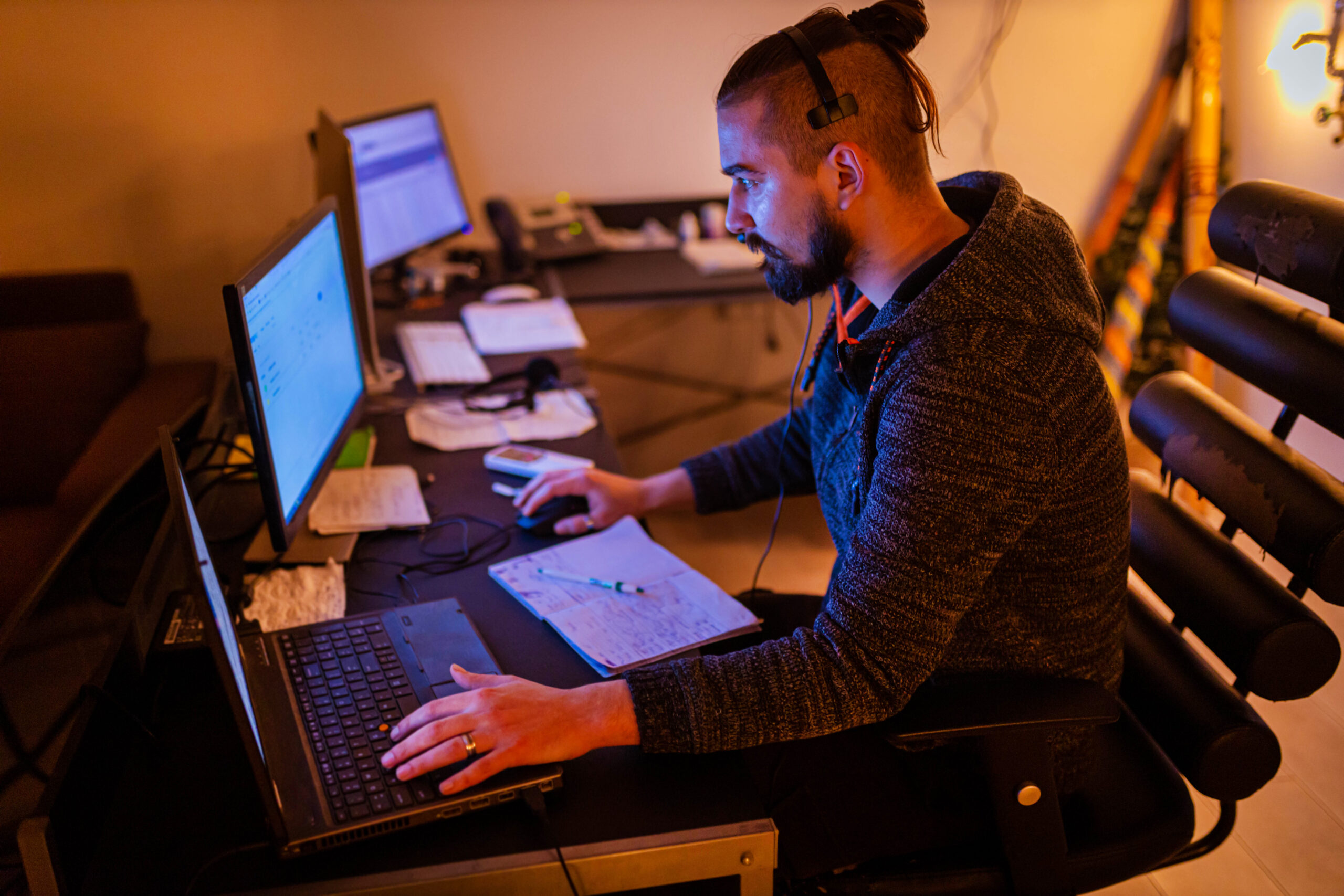
Late at night Caucasian trader working on computer

24/ 0

Coverage

0

Languages

4- 0 hour

SLAs

0

min project confirmation responses

The Client

The client is a global technology company running a content platform at massive scale, spanning hundreds of languages and markets. Their trust and safety team needed to understand not just what content said, but what it meant across languages and contexts. They required a system that could deliver reliable, structured outputs at scale without slowing under volume spikes or breaking as language mix shifted.

The Challenge

The client needed to translate and evaluate high volumes of multilingual video content fast enough to keep pace with real-world events, where content moderation decisions could not lag behind what was unfolding on the ground. Content volume was event-driven, with demand spiking unpredictably across languages and regions. Teams could go weeks with relatively low activity, then receive hours of content overnight, all still subject to strict turnaround requirements, in some cases as fast as four hours, because delays meant delayed enforcement.

Each video required timestamped outputs paired with contextual notes explaining tone, intent, and meaning in clear, decision-ready English. Linguists operated with native-level fluency in the source language and the ability to accurately convey that meaning in English, preserving nuance, cultural context, and implied intent. This level of interpretation was consistent with UN-grade translation standards, where accuracy, neutrality, and contextual fidelity are critical. They interpreted slang, metaphors, and culturally specific language, and assessed whether content crossed into hate speech, abuse, or potential incitement, aligned to moderation frameworks. This included on-screen text and visual context, not just spoken dialogue.

Critically, this work sat in the gap where automated screening systems fell short. Edge cases, where meaning was ambiguous, coded, or context-dependent, required human judgment to determine whether a video violated the platform’s terms of use. These decisions had to be made quickly and accurately, with enough context to support consistent enforcement.

The real risk was not an incorrect translation. It was missing nuance. A speaker could refer indirectly to a group, use coded language, or shift tone in a way that implied harm. A literal translation could be technically correct while still failing to capture what actually mattered.

The stakes extended beyond any single piece of content. When key context is missed, harmful material can remain on the platform, creating downstream risk across the business. At this scale, PPH provided the layer that determined whether moderation systems had the signal needed to act, or whether risk passed through undetected.

The Approach

1. Continuous intake with rapid language validation

Work entered the system continuously, often without advance notice. The first step was not translation. It was verifying what was actually being spoken. Videos were tagged with a primary language, but that label was not always reliable. Some videos contained multiple languages or switched midstream. The team needed to validate segments quickly before confirming staffing and turnaround commitments. Getting this right early prevented errors from cascading into missed SLAs or misrouted work.

2. 24/7 global staffing aligned to SLA requirements

To meet turnaround expectations, PPH ran a distributed, proven workforce across time zones. Staffing was structured in shifts to maintain continuous coverage, with a mix of translators, QA reviewers, and language leads. A core operating requirement was adherence to a five-minute confirmation window from assignment distribution, including nights, weekends, and holidays, ensuring work was acknowledged and in motion without delay. When volume increased in a particular language, resources were reallocated or expanded to maintain throughput. When demand dropped, teams scaled back without disrupting overall operations. The workforce was designed to respond quickly to changing client demand while consistently meeting SLA turnaround times.

3. Standardized translation and annotation outputs

All work was delivered via a custom platform, based on the client’s requirements. This included timestamped translations aligned to speech, explanation of tone/context/meaning, and identification of sensitive or ambiguous language. Time stamping followed defined rules based on content type, such as more frequent intervals for music, less frequent for monologues. Documentation was required to clarify intent, explain references, and flag anything that needed additional context. This kept outputs consistent and usable for downstream evaluation.

4. Contextual interpretation as a core function

A significant portion of the work involved interpreting meaning beyond the literal words. Teams had to determine whether a speaker was informing, criticizing, or promoting harmful ideas. They needed to distinguish between historical discussion and endorsement, and to clarify who was being referenced when language was indirect.

This layer of interpretation was essential because it shaped how the content would be understood and acted on downstream. Missing interpretation was the most consequential type of error and drove the need to create an optimal, custom solution for the client.

5. Platform + workflow coordination

PPH developed a centralized workflow system to manage intake, task distribution, progress tracking, and delivery. The system gave teams a real-time shared view of:

  • Work assignments across multiple contributors
  • Real-time progress against SLA targets
  • Throughput and consistency across outputs

The tooling was designed to be lightweight, work across the globe, and provide enough structure to coordinate a large, distributed team working under time pressure.

6. QA + escalation

Quality assurance combined peer review, dedicated QA roles, and oversight from language leads, creating multiple checkpoints before output reached the client. The expectation was that work would be correct on the first pass, not corrected downstream. When issues did arise, they were treated as high priority and corrected quickly, with a structured root cause analysis process used to investigate where a team member fell short or missed critical context. Findings were fed back into the workflow to prevent repeat errors. QA covered both linguistic accuracy and contextual correctness, ensuring outputs reflected what the speaker actually meant, not just what they said, with precision maintained across languages, reviewers, and volume shifts.

7. Adapting to real-world variability

The system was built to handle changing conditions. Content volume could spike on the back of current events. Priority languages could shift without notice. Teams needed to stay engaged through inconsistent workloads and then ramp up quickly when demand returned. PPH managed this through a custom workforce management tool enabling dynamic work redistribution and continuous workflow adjustments.

Outcome

PPH built and operated a multilingual translation, content moderation and review system that could keep pace with real-world events, even as demand shifted unpredictably across languages and regions. Content consistently moved through the pipeline within 4-, 6- and 24-hour SLAs, but the real impact was not speed alone. It was the removal of ambiguity at the point where decisions were made.

By introducing a validation layer into the client’s multilingual content pipeline, PPH ensured that every piece of content carried the context required for enforcement. Instead of relying on literal translations that varied by reviewer or region, the system standardized how tone, intent, and policy-relevant signals were captured and surfaced.

This reduced the operational friction that had previously slowed decision-making. Trust and safety teams no longer had to reconcile conflicting interpretations or rework unclear outputs. Escalation cycles decreased, review time compressed, and decisions could be made faster and with greater confidence across languages and time zones.

The result was not just a more reliable pipeline, but a more scalable one. As content volume surged, the system held, enabling the client to maintain enforcement quality without adding complexity or introducing new risk.

Before and After

Before engagement

  • Multilingual video content was difficult to process quickly, especially when meaning depended on cultural nuance
  • Translation alone did not provide enough context for interpretation or evaluation
  • The client’s existing screening systems left edge cases unreviewed, with no clear internal process for escalating when human review was required
  • Gaps in coverage meant that harmful content in lower-resource languages could go unreviewed for longer, increasing the client’s exposure to regulatory, reputational, and safety risk

After engagement

  • A structured, always-on pipeline produced timestamped translations with contextual notes across 31 languages
  • Trust and safety teams could interpret content faster and with greater clarity
  • Consistent coverage closed the gaps where risk was highest


Supporting Context

Key Facts

Multilingual Translation & Localization

Native-speaking linguists translated multilingual video content across 31 languages. Outputs preserved tone, meaning, and cultural context under strict SLAs.

Content Moderation & Contextual Review

Teams identified harmful, abusive, and policy-sensitive content with human judgment. Contextual interpretation helped moderation teams make faster, higher-confidence decisions.
Global Workflow Operations & QA

PPH operated a 24/7 distributed workflow with embedded QA and escalation paths. Standardized processes maintained consistency during volume spikes and shifting language demand.


Contact us

Expert linguists validate, refine, and evaluate data at every stage—ensuring AI systems perform.

Contact Us

Earth
relic
relic
relic
relic